
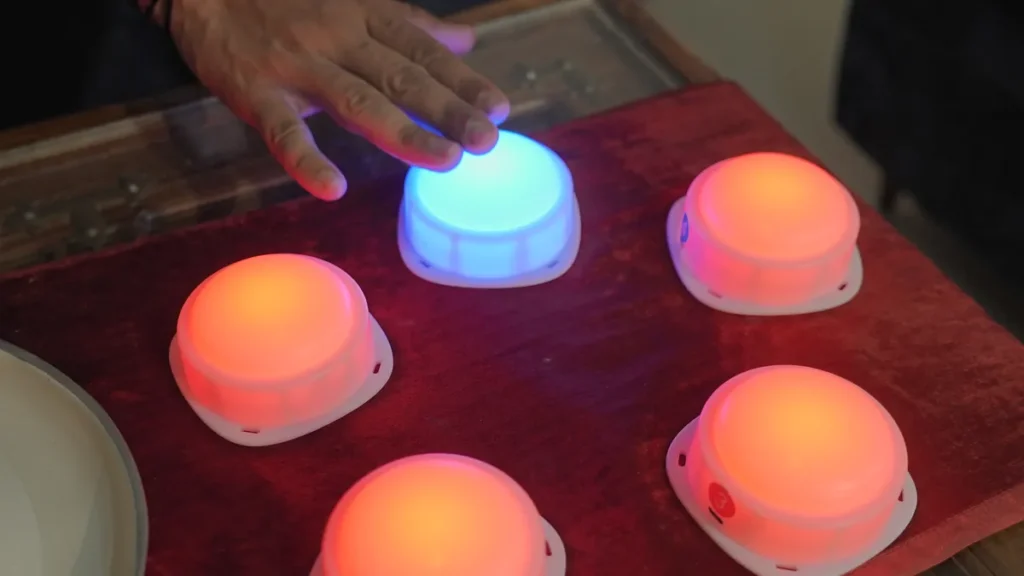
In a buzzer quiz, every question is a race. Teams press a buzzer to win the right to answer, the first press locks every other button out, and a light shows who got there first. That team gets a few seconds to answer. Right answer, points. Wrong answer, usually minus points.
I have been quizzing since my school days, and at Quiz Granny we now run quiz finals on buzzers across India. When organisers call us about buzzers, they mostly ask what a set costs and whether they should buy one. Both answers are below. I’ll start with what a buzzer does to a quiz, because that is the reason you want one.
Table of Contents
What is the buzzer effect?
Put a buzzer in front of a team and the quiz changes. Without one, a team that knows the answer writes it down and waits. With one, knowing is only half of it. You also have to be sure, and you have to be quick, because the team at the next table may know it too.
That is what I call the buzzer effect. Every answer turns into a decision. Press too early and a wrong answer costs you. Wait one second too long and another team takes the question. Teams start watching each other as closely as they watch the screen.
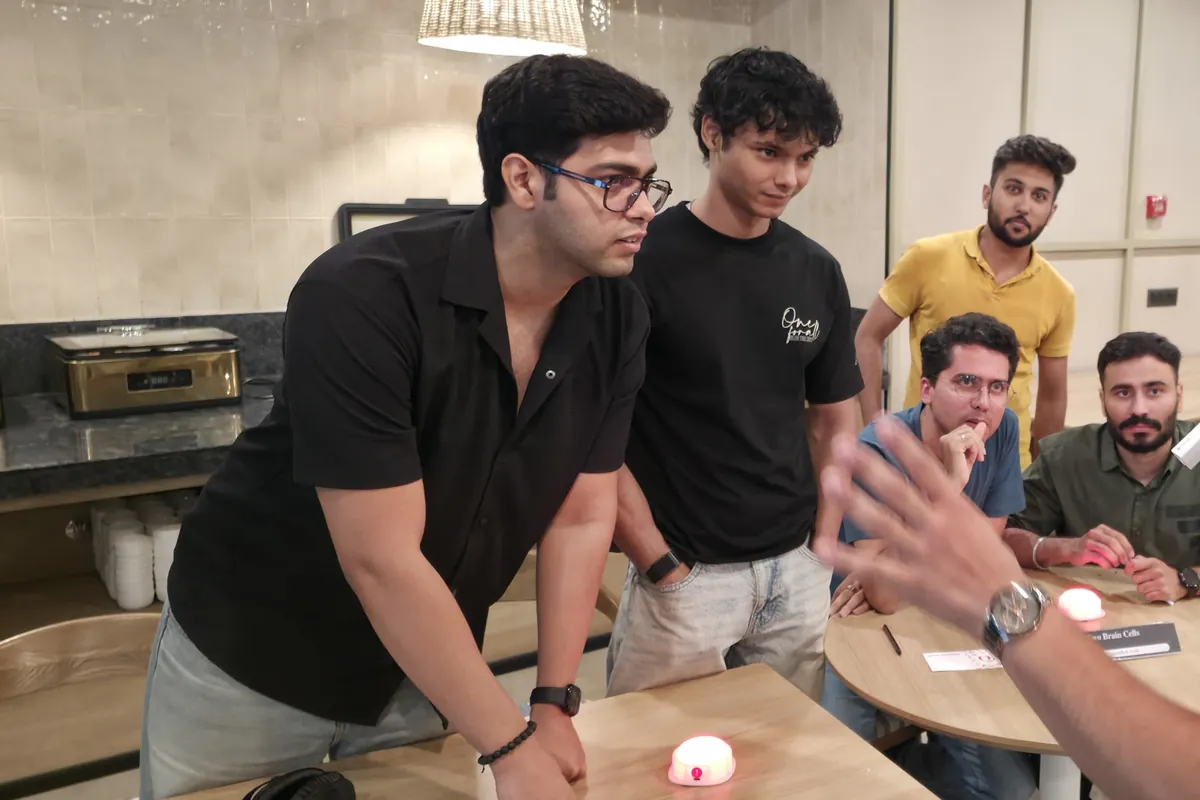
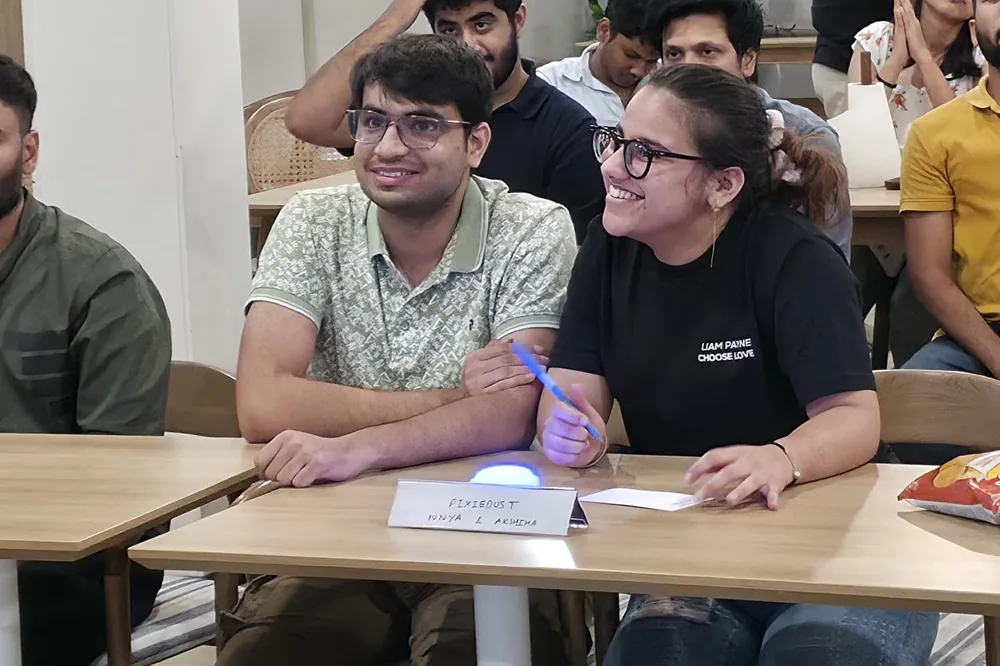
Every answer also becomes public. The light comes on, the quizmaster calls the team’s name, and the whole hall waits. A team that buzzes in and gets it right gets a cheer. A team that buzzes in and blanks gets a groan, and usually a laugh from their friends in the audience.
The audience gets something to do as well. They can’t press anything, but they guess along and watch the hands hovering over the buttons. A written round asks the audience to wait. A buzzer round gives them a race to follow.
This is also why the buzzer round usually comes last. It is the round where a team at the bottom of the table can still catch up, so the result stays open till the final question.
How does a quiz buzzer system work?
A quiz buzzer system is a set of push buttons, one per team, connected to a control box by wire or by radio. When a team presses, the box locks out every other button and lights up that team’s buzzer or number. The quizmaster resets it before the next question. Better sets also show the order of presses, so a near-tie can be checked instead of argued about.
| Wired buzzers | Wireless buzzers | Phones (online) | |
|---|---|---|---|
| Best for | A school hall or a fixed stage | Big stages where teams sit far apart | Remote players, or a hall too big for one stage |
| How “first” is decided | The first press locks out the rest | The first press locks out the rest | Everyone answers; faster correct answers score more |
| Watch out for | Cables across the stage. Tape them down | Batteries and radio interference. Test in the actual hall | It is not a true lock-out. Say so in the rules |
Sets usually come for 8 or 12 players. Most quiz finals put four to six teams on stage, so an 8-player set covers almost every event.
What does a quiz buzzer system cost in India?
Indian-made 8-player buzzer sets are listed online at about ₹11,000 to ₹19,000 plus GST (seller listings on IndiaMART, checked in November 2026). The price goes up with a bigger display or a scoring app for your laptop.
The catch is quality. Good-quality buzzers are rare in India, and a buzzer that fails in front of a full hall is worse than having no buzzer at all. That is why most professional quizzing companies import theirs. A good imported set costs somewhere around ₹25,000 to ₹50,000 before GST, and more if you need extra players or features.
| Buy your own set | Hire a quiz company | |
|---|---|---|
| What you pay for | A good imported set: around ₹25,000 to ₹50,000 + GST, plus spares | The quiz. The buzzers come with it |
| What else you need | Questions, a host, someone to run the set under pressure, batteries and storage | Nothing extra. Questions, buzzers, scoring and the quizmaster arrive together |
| Makes sense when | You run buzzer rounds every month | You run one or a few big quizzes a year |
What I tell organisers: buy a set only if your school or club runs buzzer rounds every month and someone there enjoys looking after hardware. For an annual day, a fest or one big inter-school final, hire a quiz company. You get good buzzers, and you also get the questions, the scoring and a quizmaster who has handled a disputed buzz before.
One note on how we work: we don’t rent out buzzers on their own. At Quiz Granny, lock-out buzzers and live scoring come with every quiz competition we run, and our team runs them on the day.
How do you run a buzzer round?
Read the full question, then open the buzzers. The first team to buzz answers within a few seconds, and only their first answer counts. Teams can confer before they buzz, not after. If nobody gets it, read the answer out and move on.
Here is how the buzzer round worked at the MP Tourism State Quiz 2026, which I hosted:
- The first team to buzz had 10 seconds to answer.
- On a wrong answer, the buzzers opened again after a count of five, and one more team could answer.
- No more than two teams could answer one question.
- A correct answer from the first team scored 15. A correct answer from the second team scored 10.
- A wrong answer cost 10 points, for the first team and the second.
The minus 10 is what keeps a buzzer round honest. Without it, teams buzz on a guess. Big competitions use the same idea. In the National Science Bowl, run by the US Department of Energy since 1991, a student who interrupts the question and answers wrong gives 4 points to the other team.
These are the buzzer rounds we use most. Most quizzes fit tested formats like these, and we change the scoring to suit the event and the audience.
| Buzzer round | How it works |
|---|---|
| Direct buzzer | The first team to buzz answers. A wrong answer opens the question to the others |
| Progressive clues | Clues come one at a time, hardest first. Buzz early and the question is worth more |
| Hijack | Teams may buzz in before the question is finished, at their own risk |
| Knockout | A wrong answer locks the team out for the rest of the round |
The full rule sheet, tie-breakers included, is on our quiz competition rules and format page.
5 things that go wrong in a buzzer quiz final
- Two teams press at the same moment. Use a set that shows the order of presses, read the “first press wins” rule out before the round, and make the quizmaster’s call final.
- A button stops working mid-round. Keep a second set ready, swap it, replay the question and carry on.
- A team buzzes before the question ends. Decide before the day whether that is allowed. In a hijack round it is. In a direct round it isn’t.
- The hall can’t tell who buzzed. Put the team’s name or number on the screen and have the quizmaster say it out loud.
- The scores fall behind the quiz. Give one person the scoreboard and nothing else, and show the scores after every round.
Can you run a buzzer quiz online?
Not with real buzzers. Online, the closest thing is speed scoring: everyone answers on their own phone, and faster correct answers earn more points. That is how a live quiz on QG Playground, the quiz platform we built at Quiz Granny, is scored. Players join at qgplay.live with a room code, with no app to install, and a live leaderboard shows who was quickest.
It isn’t a true lock-out, so say so in the rules. In a big hall you can use both. The whole audience plays on their phones, and the top teams come up on stage for a buzzer final.
When should you hire a quizmaster for a buzzer quiz?
When the result matters to someone. An inter-school final, a college fest’s main quiz, an annual day with prizes, a public event with an audience. A buzzer final moves fast. Someone has to read clearly, spot who pressed first, rule on a disputed answer in seconds and keep a full hall watching a race between four teams.
That is our job. We study who is playing and what you want from the day, our content team writes the questions for that audience, and a Quiz Granny quizmaster runs the final with our buzzers and scoring. See how we run quiz competitions on buzzers, or read how to hire a quiz master for your event.
Planning a buzzer quiz? Send us the date, the city and the number of teams. We’ll reply within 24 hours with a format and a quote.
Or WhatsApp us on +91 82230 91234, or call +91 82230 91234.
Written by Manas Chaturvedi, founder and quizmaster at Quiz Granny. Our team has delivered 300+ quiz events since 2023 and written 1 lakh+ questions. Through quizzing and curiosity, we have touched 10 lakh+ people.
Frequently asked questions
What is a buzzer quiz?
A buzzer quiz is a quiz where teams press a buzzer to win the right to answer. The first press locks out the other teams, and that team answers within a few seconds. A right answer scores points, and a wrong one usually costs points.
What is a buzzer round in a quiz?
A buzzer round is a round where any team can buzz in to answer. The first team to buzz gets a few seconds, often 10, and only their first answer counts. A wrong answer usually loses points. Common versions are direct buzzer, progressive clues, hijack and knockout rounds.
How much does a quiz buzzer system cost in India?
Indian-made 8-player sets are listed online at about ₹11,000 to ₹19,000 plus GST. Good imported sets, which most professional quiz companies use, cost around ₹25,000 to ₹50,000 before GST, and more for extra players or features.
Can I hire quiz buzzers for an event?
Quiz Granny does not rent out buzzers on their own. Lock-out buzzers and live scoring come with every quiz competition we run anywhere in India, along with the questions and a quizmaster to run the final.
Is there an online buzzer for quizzes?
Online quizzes use speed scoring instead of lock-out buzzers. Everyone answers on their own phone, and faster correct answers earn more points. On QG Playground, players join at qgplay.live with a room code, with no app to install, and a live leaderboard shows who was quickest.
How many teams can play on quiz buzzers?
Most sets are made for 8 or 12 players, and a stage final usually has four to six teams. If more teams enter, run a written or phone prelim first and send the top scorers to the buzzer final.