
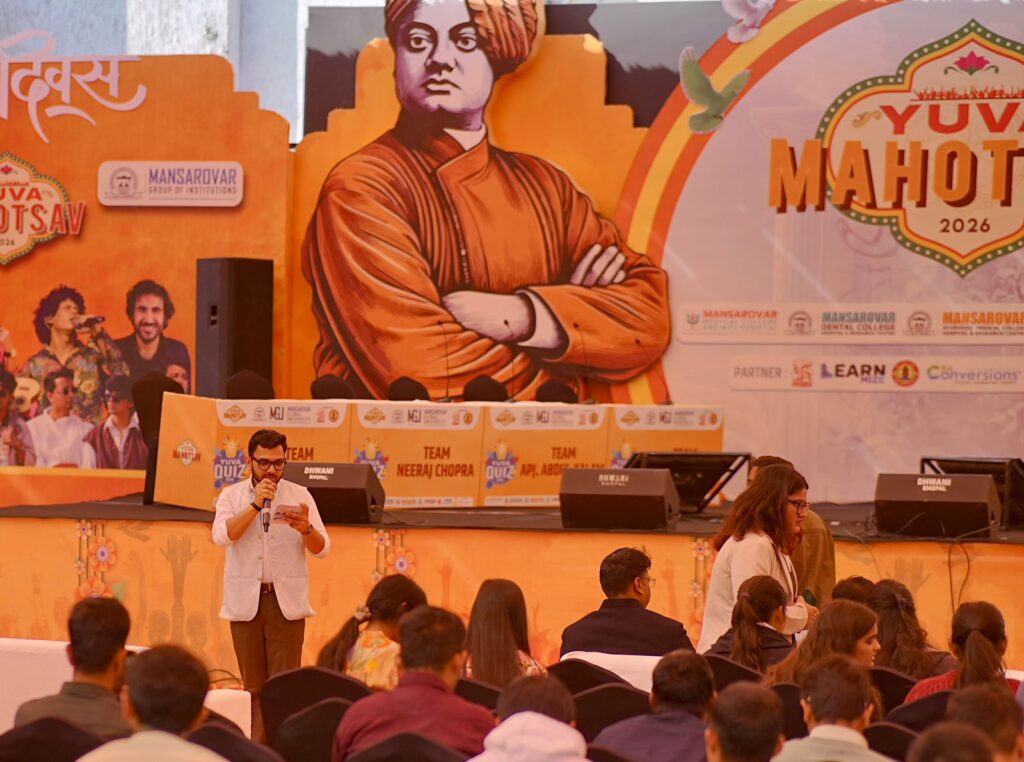
How to Organise an Inter-College Quiz Competition is a question we get asked often. We try to dive deep into this today.
Most college quiz events fail not because of a lack of enthusiasm, but because of a lack of structure. Registration chaos. Question sets that are too easy or too hard. Rounds that drag. A host who can’t manage the room. Technical issues mid-event. These are avoidable problems — and every single one of them comes down to planning.
This guide covers everything you need to know about how to organise an inter-college quiz competition — from the first planning meeting to the moment the winning team walks off stage. Whether you’re a student fest committee running your first quiz or a faculty coordinator building a flagship annual event, this is the playbook.

Step 1 — Define the Scope and Objectives
Before anything else, answer these three questions clearly:
- Who is it for? — Only your college? Colleges within your city? State-level or national open? The scope determines everything: registration process, question difficulty, logistics, and prize structure.
- What is it about? — General knowledge? A specific theme (science, business, pop culture, current affairs)? A themed quiz creates a stronger identity and makes it easier to promote.
- What outcome are you optimising for? — Maximum participation? Prestige? Campus culture? Your answer shapes every decision that follows.
India’s National Education Policy 2020 explicitly encourages competitions and quizzes as tools for developing critical thinking and knowledge beyond the classroom. This is the institutional backing that makes a well-run inter-college quiz a genuinely valuable addition to your campus calendar — not just a fest event.
Step 2 — Build Your Core Organising Team
A quiz of any meaningful scale needs a dedicated team. Assign clear ownership across these roles before planning begins:
- Event Head — owns the overall timeline, budget, and decision-making
- Content Lead — responsible for questions, round design, and answer verification
- Registrations Lead — manages outreach to colleges, team registration, and eligibility checks
- Logistics Lead — venue, AV setup, buzzers, seating, and day-of operations
- Marketing Lead — social media, posters, college outreach, and press coverage
Role clarity prevents the single biggest failure mode of student-organised events: everyone assuming someone else handled it.
Step 3 — Design the Quiz Format
This is where most organisers underinvest — and where the event’s energy is actually made or lost. Your format should answer: How many teams? How many rounds? What round types? How do teams qualify from prelims to finals?
A proven inter-college quiz competition format for 8–20 participating colleges looks like this:
- Written Prelims — 20–30 questions, all teams attempt, top 6–8 teams qualify for the stage. Keeps the process fair and builds anticipation for the finals.
- Stage Finals — Direct Question Rounds — Each team gets direct questions in rotation. 10 points for correct answer, 0 for wrong or no attempt. Tests broad knowledge.
- Stage Finals — Buzzer Rounds — Any team can buzz in and attempt. +10 for correct, -5 for wrong. Creates the highest tension and the best moments in the room.
- Specialist/Theme Round — A focused round on science, sports, entertainment, or a topic specific to your fest’s theme. Adds variety and rewards specialists.
- Audio-Visual Round — Image, audio, or video-based questions. Breaks the monotony of pure text questions and increases audience engagement dramatically.
Keep finals to 5–6 rounds. Longer than that and energy dips. Build momentum across rounds — start accessible, get progressively harder, end with the highest-stakes buzzer round.
Step 4 — Write or Source Quality Questions
This is the single most important element of any college quiz competition — and the one most committees get wrong. Common mistakes:
- Questions that are too easy — no challenge, no energy, no drama
- Questions that are too obscure — only one person in the room knows, everyone else switches off
- Questions copied directly from Google — participants have seen them before
- No variety in question type — all text, no visuals, no audio, no lateral thinking
- Factual errors in answers — nothing kills credibility faster
Good quiz questions sit at the intersection of research and craft. They should be specific enough to have a definitive answer, broad enough that a well-read student has a fighting chance, and interesting enough that the audience learns something even when teams get it wrong. That last point is non-negotiable — your audience is half the room, and they need to be engaged too.
If content quality is a concern, this is exactly where a professional quiz company adds the most value — Quiz Granny builds custom question sets for inter-college competitions with verified answers, calibrated difficulty, and round-by-round variety built in.
Step 5 — Manage Registrations and College Outreach
Start outreach at least 4–6 weeks before the event. Contact the student affairs office or cultural committee heads at target colleges directly — not just generic email blasts. A personal message to the quiz club or cultural secretary of each college converts significantly better.
Key registration decisions to make upfront:
- Team size — 2 or 3 members per team works best for inter-college formats. 4+ creates coordination problems during buzzer rounds.
- Teams per college — Limit to 1–2 teams per college for the finals stage to ensure diversity. Prelims can be open.
- Registration fee — Keep it minimal or zero for the widest participation. If charging, clearly communicate what it covers.
- Eligibility — Are postgraduate students eligible? Any year restriction? Clarify early to avoid disputes on the day.
Use a Google Form for registrations, confirm every team with an email acknowledgement, and maintain a master sheet updated daily. Chasing late registrations on event day is a chaos you can avoid entirely.
Step 6 — Sort Venue, AV, and Technical Setup
An inter-college quiz competition needs more than a classroom and a microphone. The technical setup is what separates an amateur event from one that feels professional:
- Buzzers — Physical electronic buzzers that light up and lock out other teams are non-negotiable for a finals stage. Phone-based buzzer apps are a compromise that creates disputes. Use proper hardware.
- Display screen or projector — Slides for AV rounds, score display, and question text. Ensure the screen is visible from every seat in the room.
- PA system — Clear audio for the host, judges, and audience. Nothing kills momentum like a microphone that cuts in and out.
- Seating layout — Stage teams face the audience. Audience faces the stage. Simple, but worth planning in advance so setup isn’t improvised on the day.
- Scoreboard — Live, visible scoring that the audience can track. Digital is best — a whiteboard with handwritten numbers is a downgrade in experience.
Step 7 — Get the Hosting Right
The quiz master is the most underestimated element of a successful inter-college quiz. A technically perfect event with a weak host will still feel flat. A host who owns the room — who manages pacing, handles disputed answers with authority, builds tension before revealing answers, and keeps the audience engaged between rounds — turns a quiz into an experience.
If you have a strong student host, great. Brief them thoroughly: the format, the scoring rules, what happens in a tie, how to handle wrong buzzes, and what the plan is if AV fails mid-round. Improvisation is fine — but only when it’s deliberate.
For larger events or flagship competitions, bringing in a professional quiz master eliminates this risk entirely. The host’s job is to make your teams look good and your audience feel the energy — and that’s a skill, not just a personality type.
Step 8 — Day-Of Execution Checklist
Even a well-planned event can unravel on the day without a clear run-of-show. Build a minute-by-minute schedule and assign each segment an owner. Key items to confirm on the morning of the event:
- All registered teams have confirmed attendance — have a reserve list ready for no-shows
- Buzzers tested and working — including backup plan if one fails mid-finals
- Questions reviewed one final time for errors — especially answer verification for tricky questions
- Slides loaded, tested on the actual screen — fonts, images, and video clips all confirmed working
- Judges or scorekeepers briefed on scoring rules — especially pounce/bounce rules if applicable
- Prizes confirmed and physically present — certificates, trophies, and cash prizes all verified
- Photography or documentation plan in place — someone assigned to capture the event for social media and records
When to Bring in a Professional Quiz Company
Student-run quiz events are valuable learning experiences. But for flagship inter-college competitions — the kind that become your institution’s annual marquee event — the cost of getting it wrong is high. Disputes over questions, AV failures, a host who loses the room, or a format that runs 45 minutes over time: these things don’t just ruin the day, they damage the reputation of the event for years.
A professional quiz company handles content, hosting, AV, format design, and execution — so your organising committee can focus on registrations, marketing, and the hundred other things a fest demands. Get in touch with Quiz Granny to discuss how we can support your inter-college quiz competition — from question design only, to full end-to-end delivery.
Quiz Granny is India’s premier end-to-end quiz solutions company, delivering professional inter-college quiz competitions, corporate quiz events, and gamified learning experiences across India. We handle everything — format design, custom content, live hosting, and AV production.
How do you organise an inter-college quiz competition?
Organising an inter-college quiz competition requires clear planning across six areas: defining scope and objectives, building an organising team, designing the quiz format, creating quality question content, managing registrations and college outreach, and sorting venue and AV setup. The most critical element is question quality — questions must be specific enough to have definitive answers, broad enough for well-read students to attempt, and interesting enough to engage the audience throughout. A typical finals format includes written prelims, direct question rounds, buzzer rounds, and an AV or theme-based round.
What is the best format for an inter-college quiz competition?
The most effective inter-college quiz format starts with written prelims where all teams attempt the same questions, with the top 6–8 teams qualifying for the stage finals. The finals typically run 4–5 rounds: at least one direct question rotation round, one or two buzzer rounds (with pounce and bounce scoring), a theme or specialist round, and an audio-visual round. Keep finals to 5–6 rounds to maintain energy. Build difficulty progressively across rounds, with the highest-stakes buzzer round at the end.
How far in advance should I start planning a college quiz competition?
For an inter-college quiz competition with 8 or more participating colleges, start planning at least 6–8 weeks before the event date. College outreach and registrations need at least 4 weeks to run properly. Content creation, format design, and AV arrangements need another 2–3 weeks. If you’re bringing in a professional quiz company for hosting or full delivery, contact them at least 4–6 weeks before the event so content can be custom-built for your specific format and audience.
Can a professional quiz company help organise our inter-college quiz?
Yes — and for flagship events, this is often the smartest decision. A professional quiz company handles question creation, format design, live hosting, AV and buzzer setup, and on-the-day execution. This frees your organising committee to focus on registrations, marketing, logistics, and everything else a large college fest demands. Quiz Granny offers both full end-to-end delivery and partial support (content only, or hosting only) depending on what your committee needs.