

Let’s be honest. Most corporate training sessions are where attention goes to die.
You’ve probably sat through one—the slides from 2019. The facilitator is reading off bullet points—the group activity where half the team is checking their phones. Two hours later, nobody can tell you what the session was actually about.
And yet, L&D teams keep running the same playbook — and then wonder why retention numbers are low, why post-training assessments are embarrassing, and why employees groan when the next “mandatory training” invite lands in their calendar.
Here’s what changes everything: gamified training. Specifically, quiz-based, competitive, energizing formats that make learning feel less like a lecture and more like a sport. In this post, I’m going to show you exactly why gamified training outperforms traditional L&D — backed by data and real-world results.
What Is Gamified Training, Really?
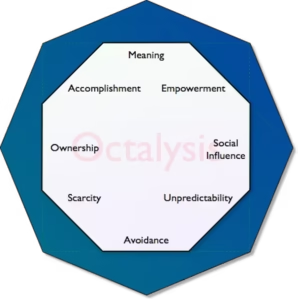
Gamification in L&D is not about slapping a leaderboard onto your existing slides and calling it a day. Real gamified training restructures the entire learning experience around game mechanics — competition, instant feedback, rewards, team dynamics, and challenge-based progression.
The most effective format? The corporate quiz. Not a pop quiz that feels like a school test, but a professionally designed, hosted quiz event with custom questions, live buzzer rounds, team competition, and a genuine buzz in the room. Think KBC energy — applied to your product knowledge, compliance training, or onboarding curriculum.
When done right, gamified training isn’t just more enjoyable — it’s measurably more effective. Here’s why.
The Problem with Traditional L&D: A Quick Diagnosis
Before we talk solutions, let’s name the problem clearly. Traditional corporate training fails for three core reasons:
- Passive consumption — Listening is not learning. When employees sit and absorb information without active recall or application, retention drops sharply within 24–48 hours.
- No emotional hook — Learning is sticky when it carries an emotion: excitement, competition, the thrill of getting something right. Slide decks carry zero emotional charge.
- No accountability — In a room full of people, it’s easy to zone out. There’s no mechanism that forces engagement. Gamification changes that with team rounds, live scoring, and visible performance.
The result? Gallup’s workplace research consistently shows that low engagement is a direct drag on productivity and retention. Training that employees don’t engage with doesn’t just waste time — it actively breeds disengagement.
5 Proven Ways Gamified Training Outperforms Traditional L&D
1. Active Recall Beats Passive Listening — Every Time
The single most powerful thing about quiz-based learning is that it forces active recall — the brain has to retrieve information, not just receive it. Cognitive psychology research consistently shows that retrieval practice dramatically improves long-term memory retention compared to re-reading or re-listening.
When your employees compete in a quiz round on product features, compliance rules, or brand guidelines, they aren’t just being tested — they’re reinforcing neural pathways. That knowledge sticks. Compare that to a 90-minute presentation on the same topic, and there’s simply no competition (pun intended).
2. Competition Creates Intrinsic Motivation
Nobody wants to be the team that came last. That’s not a design flaw — it’s a feature. Healthy competition triggers intrinsic motivation, meaning employees engage because they want to win, not because they’ve been told they must attend.
A well-structured corporate quiz event uses this instinct brilliantly. Teams form, loyalty kicks in, and suddenly the finance team is studying the new compliance update with real intent — because they’re not going to let the operations team beat them again.
That kind of self-motivated learning is priceless. No L&D budget can manufacture it through slides.
3. Instant Feedback Accelerates Learning Loops
In traditional training, feedback is delayed — a post-assessment days later, or worse, never. In a gamified quiz setting, feedback is instantaneous. You answered wrong, the right answer is revealed immediately, and the facilitator adds context in real time. That’s a tight learning loop.
Tight learning loops = faster knowledge acquisition. Employees don’t leave wondering if they understood. They know, right there in the room, where their gaps are — and they remember the corrected answer because it came with an emotion (the sting of getting it wrong in front of their team).
4. It Builds Team Cohesion as a Side Effect
This is the bonus outcome that L&D teams often don’t anticipate: gamified training is also a team-building exercise. When employees collaborate under pressure, strategise together, and celebrate wins as a unit — they leave with stronger interpersonal bonds than they entered with.
Traditional training? The best you can hope for is a pleasant enough break from their desks. Gamified training delivers on two mandates at once — learning outcomes and team engagement. That’s a serious ROI multiplier for HR and L&D heads justifying event budgets.
5. Employees Actually Look Forward to It
This might sound like a soft metric, but it isn’t. The single greatest predictor of training effectiveness is whether employees show up mentally present — not just physically present. If they’re dreading it, you’ve already lost.
We’ve hosted quiz-based training sessions where employees asked us: “When’s the next one?” That never happens after a compliance slide deck. When people look forward to learning, the results speak for themselves.
What Does a Gamified Training Session Actually Look Like?
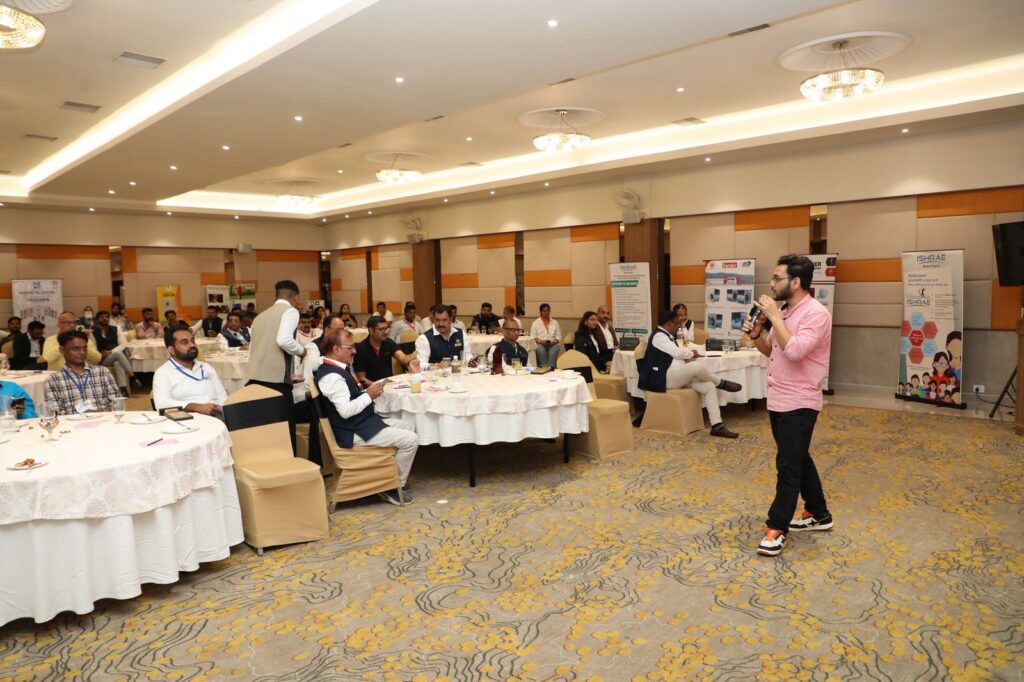
Here’s what a professionally run gamified training quiz session looks like in practice — what Quiz Granny delivers end-to-end:
- Custom content design — Questions are built around your actual training objectives: product knowledge, policy updates, brand values, compliance requirements. Nothing generic.
- Competitive format — Teams of 4–6, multiple rounds with escalating difficulty, buzzer-based rapid-fire, visual rounds, and audio/video clues where relevant.
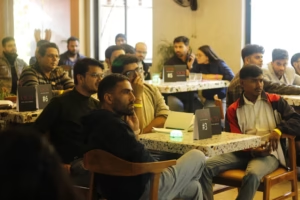
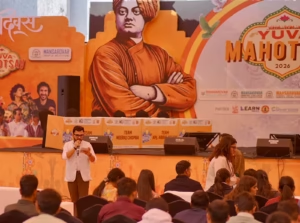
- Live hosting with energy — A trained quiz master runs the room, manages pacing, keeps the energy high, and facilitates learning moments after each round.
- AV and tech setup — Professional buzzers, scoring system, screen display, and smooth logistics so the session feels like a show, not a meeting.
- Post-event impact report — A summary of performance by team, knowledge gaps identified, and recommendations for follow-up — something no generic event manager provides.
The result is a session your employees will actually talk about at lunch — and remember three months later.
Who Should Consider Gamified Corporate Training?
If you’re an HR Head, L&D Lead, or business leader dealing with any of the following, gamified training deserves serious consideration:
- New product or policy rollouts where retention matters
- Annual compliance training that nobody takes seriously
- Onboarding for new batches of employees
- Leadership development programs need interactive elements
- Offsites, town halls, or team days where engagement is the primary goal
- Cross-functional team events where you want departments to interact differently
The format scales from teams of 20 to events of 500+. And the ROI is measurable — in assessment scores, in post-event surveys, and in the conversations that happen in the office the next day.
The Real Cost of Boring Training
Here’s a number worth sitting with: the average cost of a disengaged employee, per Harvard Business Review research on workplace engagement, runs into lakhs per year when you factor in lost productivity, absenteeism, and turnover. Training that doesn’t land is a direct contributor to that number.
On the flip side, investing in high-engagement learning formats doesn’t just improve knowledge retention — it signals to your team that their time is valued, that learning can be energizing, and that the organization takes culture seriously. That’s a retention signal, not just a training signal.
The question isn’t whether gamified training is worth it. The question is how long you’re willing to keep running sessions that aren’t.
Ready to Make Your Next L&D Session Unforgettable?
At Quiz Granny, we design and host gamified training quiz sessions for corporates across India — custom content, professional hosting, full AV setup, and a post-event report that gives your L&D team real data. Whether it’s a team of 30 or a company-wide event of 500, we build it to your objectives.
If you’re planning your next training session, team offsite, or onboarding program — let’s talk about building something your employees will actually remember. Get in touch with us here, or book a quick 15-minute call with Manas directly.
Quiz Granny is India’s premier end-to-end quiz solutions company, offering custom-designed quiz experiences for corporates and educational institutions across the country. From concept to content to live hosting — we handle everything, so you can focus on the outcome.
What is gamified training in the corporate context?
Gamified training uses game mechanics — competition, scoring, teams, instant feedback, and rewards — to make corporate learning more engaging and effective. The most impactful format is quiz-based: professionally designed quiz events where employees compete in teams while learning job-relevant content. It’s not about making learning ‘fun for fun’s sake’ — it’s about improving retention, participation, and knowledge application using the psychology of play.
How does gamified training improve knowledge retention?
Gamified training works through active recall — the brain has to retrieve information in real time, under mild competitive pressure. This retrieval practice is one of the most evidence-backed techniques in cognitive psychology for improving long-term memory. Combine that with instant feedback (knowing immediately whether your answer was right or wrong) and emotional engagement (the energy of competition), and you have a recipe for knowledge that sticks far longer than passive lecture formats.
Can gamified training work for compliance or technical topics?
Absolutely — and it’s often where the format shines brightest. Compliance training and technical knowledge are exactly the kind of content that employees find dry and forgettable in traditional formats. When the same content is repackaged into a competitive quiz with custom questions tailored to your specific policies, products, or procedures, retention improves significantly. At Quiz Granny, we regularly design quiz events around compliance, product knowledge, onboarding curricula, and brand values — and the results speak for themselves.
How do I hire a professional quiz company for corporate training in India?
Look for a company that offers end-to-end service: custom content creation (not generic question banks), live professional hosting, proper AV and tech setup, and ideally a post-event report with insights. Quiz Granny provides all of this for corporate clients across India. You can reach us via the contact page on quizgranny.com or book a direct call with our Founder and Quiz Master to discuss your specific requirements.